The Stages of Adapting to Life Abroad: What Every Expat Should Know
Moving abroad is one of life's most exciting adventures. Whether you've relocated for work, love, education, or simply the desire for a fresh start, living in a foreign country promises new experiences, personal growth, and unforgettable memories.
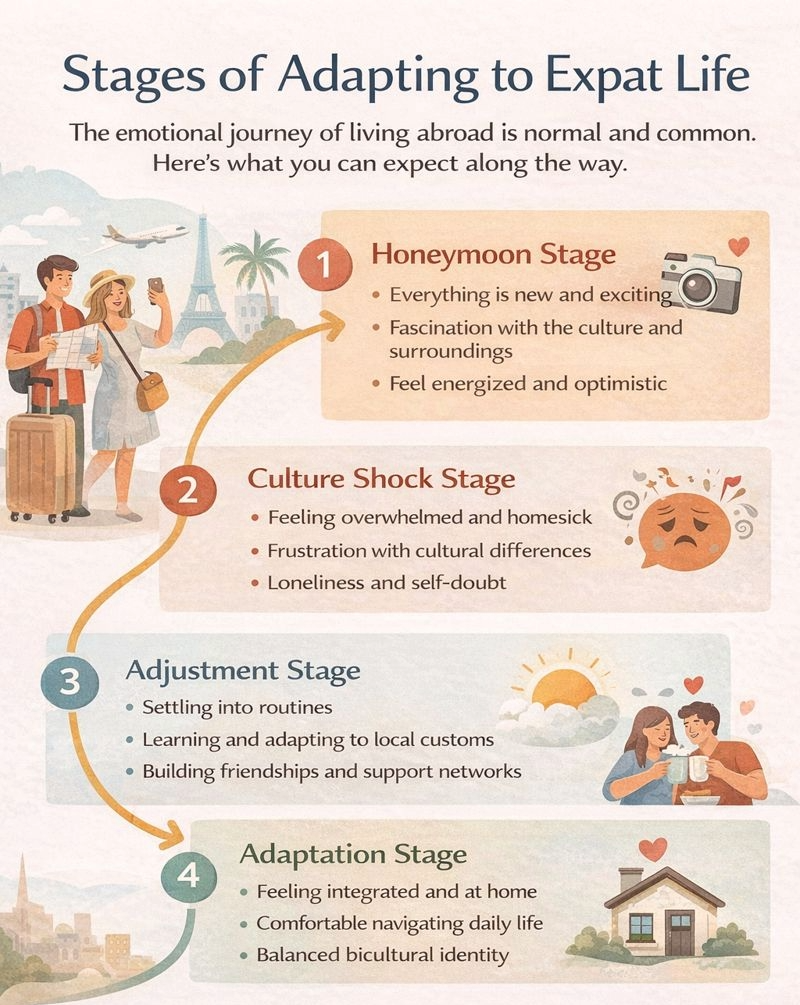
But here's what the glossy instagram posts don't always tell you: adapting to life abroad is rarely a smooth, linear journey. Most expats experience a predictable pattern of emotional stages as they adjust to their new home. Understanding these stages can help you navigate the inevitable ups and downs with greater self-compassion and resilience.
Let's explore the stages of expat adaptation and what you can expect along the way.
The Honeymoon Phase: Everything is Wonderful
When you first arrive in your new country, everything feels exciting and novel. The different architecture, unfamiliar foods, new language sounds, and cultural quirks are endlessly fascinating. You're running on adrenaline, exploring your neighborhood, trying new restaurants, and documenting everything for the folks back home.
During this honeymoon phase, which typically lasts anywhere from a few weeks to several months, the challenges of expat life feel manageable or even charming. Can't figure out how to use the washing machine? It's a funny story. Got lost trying to find the grocery store? An adventure!
You might feel energized, optimistic, and proud of yourself for taking this brave step. This phase is genuinely enjoyable, but it's important to recognize it for what it is: temporary.
What helps during this phase:
Embrace the excitement while it lasts
Take plenty of photos and journal about your experiences
Start building routines that will serve you later
Begin learning the language if you haven't already
The Culture Shock Phase: Reality Sets In
Eventually, the novelty wears off, and the real work of adapting begins. Welcome to culture shock, the stage that catches most expats off guard.
Culture shock isn't just about struggling with language barriers or missing familiar foods (though those are part of it). It's a deeper sense of disorientation that comes from being immersed in a culture with different values, communication styles, social norms, and ways of doing things.
During this phase, you might experience:
Frustration and irritability - Small things that once seemed charming now feel exhausting. Why is everything so complicated? Why don't people just do things the "normal" way?
Homesickness - You miss not just people, but the ease of understanding cultural references, knowing how things work, and being able to express yourself fully in your native language.
Isolation and loneliness - Even if you're surrounded by people, you might feel profoundly alone. It's hard to form deep connections when you're navigating a new culture and possibly a new language.
Anxiety and self-doubt - You might question whether you made the right decision to move abroad. Imposter syndrome can creep in, especially if you're working in your host country.
Physical symptoms - Culture shock often manifests physically through sleep disturbances, changes in appetite, headaches, or a weakened immune system.
This phase can last several months and may feel like you're taking two steps forward and one step back. Some days are better than others. The intensity varies depending on factors like how different the new culture is from your home culture, your language proficiency, your support system, and your previous experience with change and adaptation.
What helps during this phase:
Recognize that what you're experiencing is normal
Maintain connections with home while also investing in local relationships
Establish self-care routines
Find expat communities or support groups
Consider working with a therapist who specializes in expat issues

The Adjustment Phase: Finding Your Rhythm
Gradually, things start to click. You develop strategies for navigating daily life. You find your favorite local café, figure out the public transportation system, and maybe even crack a joke in the local language.
During the adjustment phase, you're developing what psychologists call "bicultural competence." You're learning to code-switch between your home culture and your host culture. You start to appreciate aspects of your new culture while maintaining your connection to your roots.
The emotional roller coaster begins to level out. You still have hard days, but they're balanced by genuinely good ones. You're building meaningful relationships, establishing routines, and feeling more competent in your daily life.
This doesn't mean everything is perfect. You might still feel frustrated by bureaucracy, miss important events back home, or struggle with certain aspects of the culture. But these challenges no longer define your entire experience.
What helps during this phase:
Celebrate your progress, no matter how small
Deepen relationships with both expats and locals
Engage with cultural activities that interest you
Maintain flexibility and curiosity
Reflect on how you've grown
The Adaptation Phase: Feeling at Home
Eventually, most expats reach a stage where their host country genuinely feels like home. You've developed a sense of belonging. You have established routines, meaningful relationships, and cultural competence. You can navigate social situations with relative ease and feel comfortable in your environment.
In this phase, you might find yourself defending your adopted country to visitors or getting annoyed when tourists don't follow local customs. You understand cultural nuances and can appreciate both the strengths and limitations of your host culture.
Interestingly, this is also when many expats develop a more nuanced perspective on their home culture. You see both cultures more clearly, appreciating aspects of each while recognizing that neither is objectively "better."
Some expats describe feeling like they don't fully belong anywhere anymore, existing instead in a "third culture" that blends elements of both. This can feel disorienting, but it's also a sign of successful adaptation and personal growth.
What characterizes this phase:
Feeling comfortable and competent in daily life
Having meaningful relationships in your host country
Appreciating your host culture while maintaining your identity
Developing a more complex, nuanced worldview
Feeling less need to constantly compare cultures
The Re-entry Shock: The Stage No One Warns You About
Here's something many people don't realize: if you eventually return to your home country, you'll likely experience reverse culture shock or re-entry shock. After adapting to life abroad, returning "home" can feel surprisingly difficult.
You've changed. Your home country has changed. The person you were when you left no longer exists, and you might feel like you don't quite fit anymore. Friends and family may not understand your experiences, and the things that once felt normal might now seem strange.
Re-entry shock can be just as challenging as the initial culture shock, sometimes more so because it's unexpected. People assume coming home will be easy, so they're unprepared for the grief, disorientation, and sense of loss that often accompanies repatriation.
What helps during re-entry:
Give yourself permission to grieve your expat life
Recognize that readjustment takes time
Stay connected to your expat community
Share your experiences when people are genuinely interested
Integrate what you learned abroad into your life at home
Everyone's Journey is Unique
While these stages provide a helpful framework, remember that everyone's adaptation journey is different. You might move through stages quickly or slowly. You might skip stages, cycle back through them, or experience multiple stages simultaneously.
Factors that influence your adaptation include the cultural distance between your home and host countries, language proficiency, the reason for your move, your personality, previous international experience, social support, and whether you have choice and control over your relocation.
Some expats sail through culture shock while struggling later with adaptation. Others have an extended honeymoon phase followed by intense culture shock. Your experience is valid regardless of how it compares to the "typical" pattern.
When to Seek Support
Adapting to life abroad is challenging even under the best circumstances. Sometimes, though, the struggle becomes more than you can manage alone. Consider reaching out for professional support if you're experiencing:
Persistent depression, anxiety, or hopelessness
Inability to function in daily life
Relationship problems related to the move
Substance abuse as a coping mechanism
Thoughts of self-harm
Complete social isolation
Physical symptoms that interfere with your quality of life
Working with a therapist who understands expat experiences can make a tremendous difference. They can help you process the unique challenges of living abroad, develop effective coping strategies, and navigate the emotional complexity of your journey.
Your Adaptation is a Process, Not a Destination
Living abroad changes you. It challenges your assumptions, expands your perspective, and reveals strengths you didn't know you had. The adaptation process, with all its difficulties, is also an opportunity for profound personal growth.
Be patient with yourself as you navigate these stages. Reach out for support when you need it. Celebrate your resilience. And remember that struggling with adaptation doesn't mean you've made a mistake. It means you're human, navigating one of life's most significant transitions.
Your expat journey is uniquely yours, and you don't have to walk it alone.
Need to Talk?
If you're struggling with any stage of expat life, or simply want support as you navigate this journey, I'm here to help. As a therapist specializing in expat issues, I understand the unique challenges of living abroad.
Book a free 20-minute connection call to discuss how therapy can support you through culture shock, homesickness, identity shifts, relationship challenges, or any other aspect of your expat experience. Let's explore whether we're a good fit and how I can help you thrive in your new home.
Living abroad is an incredible adventure. You deserve support to make the most of it.
Explore other articles:
Understanding Trailing Spouse Syndrome
How to deal with homesickness and grief after moving abroad
About Expatriate Therapy
Expatriate Therapy specialises in supporting individuals and couples navigating the unique psychological challenges of international relocation. With specialised training in expat mental health and personal experience expat life, I provide evidence-based therapy for trailing spouses, expat couples, and globally mobile professionals. Learn more about me here.
