Understanding Trailing Spouse Syndrome
Moving abroad for your partner's career can feel like the adventure of a lifetime. New countries, new cultures, new experiences waiting around every corner. Yet for many trailing spouses, the reality is far more complex than the glossy expatriate lifestyle often portrayed on social media.
If you've relocated internationally to support your partner's career and find yourself struggling with feelings of loss, isolation, or identity confusion, you're not alone. What you're experiencing has a name: trailing spouse syndrome.
What Is Trailing Spouse Syndrome?
Trailing spouse syndrome refers to the unique set of emotional, psychological, and practical challenges faced by individuals who relocate internationally to accompany their partner's career move. Unlike the "lead" spouse who often has a built-in professional network, clear daily structure, and defined purpose through their job, trailing spouses frequently find themselves navigating a profound identity crisis.
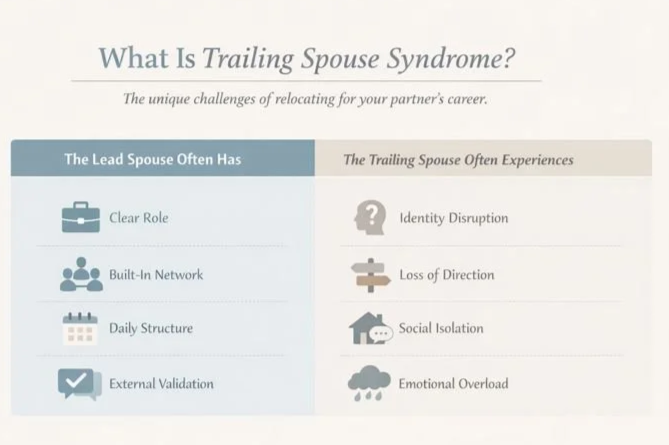
The syndrome encompasses a range of symptoms including depression, anxiety, loss of self-identity, reduced self-esteem, feelings of resentment, social isolation, and a sense of being "stuck" or directionless. These feelings can emerge even when the decision to move was mutual and enthusiastic.
The Hidden Emotional Cost of International Relocation
When couples make the decision to move abroad, the focus typically centres on logistics: visas, housing, schools for children, and the lead spouse's job transition. What often gets overlooked is the emotional and psychological journey of the trailing spouse.
Loss of Professional Identity
For many trailing spouses, the move means leaving behind a career they've spent years building. Whether due to work visa restrictions, professional licensing issues, language barriers, or the demands of supporting the family through transition, career continuity becomes impossible.
This loss extends beyond income. Your career represents years of education, skill development, achievements, and professional relationships. It's a core part of how you define yourself. When that's suddenly removed, the question "Who am I?" becomes uncomfortably difficult to answer.
Social Isolation and Loneliness
Making friends as an adult is challenging under the best circumstances. Add language barriers, cultural differences, and the absence of built-in social structures like a workplace, and loneliness can become overwhelming.
While your partner develops relationships with colleagues and has natural daily interactions, you may find yourself spending days with limited meaningful social contact. Even in expat communities, finding genuine connection can be difficult when many relationships feel transient or superficial.
The Invisible Labor
Trailing spouses often become the "CEO of the household," managing everything from navigating foreign bureaucracy to finding doctors, schools, and services in an unfamiliar system. This invisible labor is exhausting, rarely acknowledged, and offers little sense of accomplishment or recognition.
Unequal Partnership Dynamics
What started as a mutual decision can begin to feel lopsided. Your partner's career advances while yours stagnates or disappears. They have clear purpose and daily validation while you struggle to find your footing. These imbalances can breed resentment, guilt, and communication breakdowns.

Why Traditional Advice Often Falls Short
If you've searched for help with these feelings, you've likely encountered well-meaning advice: "Join a club!" "Learn the language!" "Volunteer!" "Start a blog!" While these activities can certainly help, they often fail to address the deeper psychological challenges at play.
Trailing spouse syndrome isn't simply about being busy or staying occupied. It's about reconstructing your identity, processing grief for the life you left behind, navigating complicated emotions within your partnership, and finding authentic purpose in dramatically changed circumstances.
Recognising the Signs You Need Support
Trailing spouse syndrome can manifest differently for everyone, but common signs include:
Persistent feelings of sadness, emptiness, or tearfulness
Loss of interest in activities you once enjoyed
Difficulty getting motivated or finding purpose in your days
Anxiety about the future or your relationship
Resentment toward your partner despite knowing they're not to blame
Comparing your current self unfavorably to who you were before the move
Feeling guilty for being unhappy when you "should" be grateful for the opportunity
Withdrawing from social interactions or struggling to form connections
Physical symptoms like fatigue, changes in sleep or appetite, or unexplained aches
If you're experiencing several of these symptoms consistently, it's time to seek support. These feelings don't simply disappear with time, and you don't have to navigate them alone.
There Is a Path Forward
The good news is that trailing spouse syndrome is treatable. With the right support and strategies, you can rebuild your sense of self, find purpose and fulfillment, and create a life abroad that feels authentic to who you are.
Recovery isn't about forcing yourself to be grateful or positive. It's about honestly acknowledging your losses, understanding the complexity of your emotions, developing tools to navigate relationship dynamics, and intentionally reconstructing an identity that honors both your past and your present.
Specialized Therapy for Trailing Spouses
At Expatriate Therapy, I specialise in working with trailing spouses experiencing these exact challenges. As someone who deeply understands the expatriate experience, I provide individual counselling and therapy specifically designed for trailing spouses.
Our work together addresses:
Identity reconstruction: Moving beyond the loss of your previous identity to discover who you are now
Grief processing: Acknowledging and working through the many losses that accompany international relocation
Relationship navigation: Addressing imbalances and communication challenges with your partner
Purpose discovery: Finding meaningful direction that aligns with your values and circumstances
Emotional regulation: Managing depression, anxiety, and resentment in healthy ways
Social connection strategies: Building genuine relationships in your new location
Self-compassion development: Releasing guilt and being kinder to yourself through this transition
Therapy provides a confidential space where your feelings are validated, your experiences are understood, and you receive practical tools for moving forward. You don't have to figure this out alone.
To get started, you are welcome to book a free 20 minute connection call with me to explore working together.
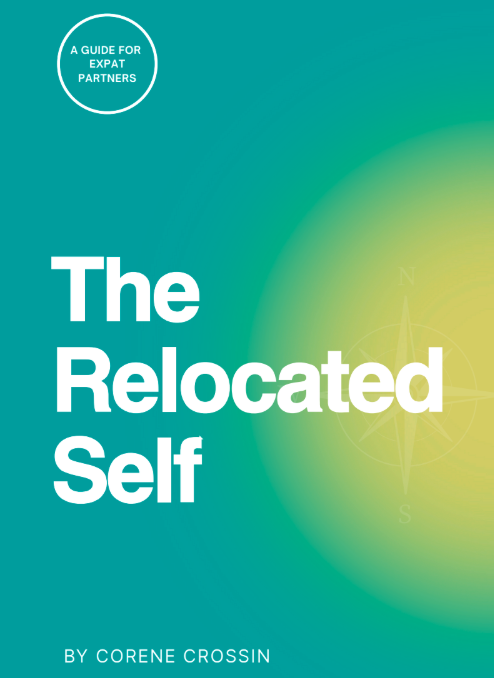
Introducing my upcoming book, The Relocated Self: A Guide for Trailing Spouses
Understanding the need for accessible, specialised resources, I've written a comprehensive book specifically for trailing spouses navigating these challenges.
The Relocated Self book offers:
In-depth exploration of the psychological stages of life as a trailing spouse (including the initial excitement, followed by the unexpected grief and guilt that follow)
Evidence-based strategies for managing depression, anxiety, and identity loss
Practical frameworks for reconstructing purpose and meaning
Communication tools for addressing relationship imbalances
Real stories from trailing spouses who've successfully navigated this journey
Actionable exercises to work through at your own pace
Download a Free Chapter of The Relocated Self
I want to support as many trailing spouses as possible, which is why I'm offering a free downloadable chapter from my upcoming book. This chapter focuses on understanding the identity crisis that accompanies international relocation and offers strategies for beginning your recovery journey.
You Deserve Support
If you're a trailing spouse struggling with your identity, purpose, or emotional wellbeing, please know that your feelings are valid. The challenges you're facing are real, complex, and deserve professional attention.
You don't have to wait until you're in crisis to reach out for support. Whether you're newly arrived and already struggling, or years into your expatriate experience and still feeling lost, therapy can help.
At Expatriate Therapy, I'm committed to supporting trailing spouses through evidence-based, compassionate counselling that honors your unique experience. I understand the nuances of expatriate life, the specific challenges trailing spouses face, and the path toward rebuilding a fulfilling life abroad.
Take the Next Step
You've already taken the brave step of acknowledging these feelings. Now it's time to invest in your mental health and wellbeing.
Ready to begin your journey? Contact me to schedule a one-on-one therapy session where we can discuss your specific challenges and create a personalised treatment plan. I offer flexible scheduling to accommodate different time zones and can work with you wherever you're located.
Want to learn more first? Download the free chapter from my upcoming book to gain deeper insight into trailing spouse syndrome and start implementing strategies today.
Your identity, purpose, and happiness matter. The life you've left behind doesn't have to define you, and the life you're living now doesn't have to feel empty. With support, you can rediscover yourself, rebuild your confidence, and create a meaningful life that honours all of who you are.
About Expatriate Therapy
Expatriate Therapy specialises in supporting individuals and couples navigating the unique psychological challenges of international relocation. With specialised training in expat mental health and personal experience with global living, I provide culturally sensitive, evidence-based therapy for trailing spouses, expat couples, and globally mobile professionals.
Contact me today to learn more about our services or to download your free book chapter. Your journey toward healing and rediscovery begins here.
Explore Other Articles
I gave up my career to move abroad with my partner. Why do I feel like I have lost myself?
Expat relationships: Common problems and how to work through them
